ZEIT FÜR KONTRA

„Woher, frage ich mich, kommt es, dieses ungute, ja, geradezu Trotz erzeugende Gefühl, das in mir aufsteigt, wenn westlich-medial und kaum tiefer hinterfragt kolportiert wird, die – zweifellos völkerrechtswidrig überfallenen (böse Zungen behaupten, mit Ansage), oft (abgesehen von Kiev’s Feierprinzessinnen und Kriegs-Drückebergern) leidenden – Ukrainer seien per se die Guten, für alle Zeit? Jene, die bedingungslos unterstützt werden müssten gegen den „Aggressor“, egal, was es kostet, wie lange es dauert und ganz gleich, was das eigene Wahlvolk will, um die deutsche Außenministerin Baerbock zu zitieren?

Und Russen seien hingegen schlecht, feige (insbesondere, weil sie sich nicht gegen einen Despoten auflehnten), rückschrittlich, oft – im Falle der Soldaten – unmenschlich, verroht und voll vertrottelt sowieso, da sie sich wie Tontauben abschießen ließen und mit Panzern aus den Fünfzigern kämpften, und mit MG’s aus dem 1. Weltkrieg; ha, ha, ha, selten so gelacht.

Stimmt etwas nicht mit mir?

Bin ich etwa unfähig, Recht von Unrecht zu unterscheiden? Bin ich Opfer russischer Propaganda, gefangen im russischen Narrativ des angeblichen „Rechts aus Historie“?

Gehe ich zum Lachen in den Keller, nur weil ich mich weigere, ins westlich-mediale Horn des Russen-Bashings und der Häme zu blasen?

Oder neige ich zur Verallgemeinerung, schere sozusagen die Ukrainer – sicher dann zu unrecht – über einen Kamm, nur weil es mir – bis auf Ausnahmen – also seltener gelungen ist, anständigen Menschenexemplaren von dort stammend begegnet zu sein? Und in der Tat, Gier, Täuschung, Lüge und national-patriotisch angereicherte Gereiztheit schwangen bei diesen Begegnungen immer mit; selbst, als ich mein Zuhause ukrainischen Flüchtlingen für Monate öffnete. Bis sie mich beklauten. Ich muss wohl ein Pechvogel gewesen sein. Und nochmal einer, weil ich hingegen ausgerechnet den offenbar selten existierenden Russen begegnet bin, die edlen Charakters waren? Ich muss (wie könnte es anders sein?) die die Regel bestätigende Ausnahme sein. Ganz sicher! Gott, habe ich ein Pech!

Was ist also mit mir?

Liegt’s an meiner Liebe zur Russischen Literatur, dass mir Ukrainer suspekt erscheinen? Kann eigentlich nicht sein, obwohl ich schon frohlockte, als ich in meinen jungen Jahren im Stillen Don (Scholochov’s Meisterwerk) las, wie die Ukrainer von den Don-Kosaken beim Mehlwiegen regelmäßig auf die Fresse kriegten. Ich Schuft. Naja, ich war eben Fan von Grigori Melechow; voreingenommen, wenn man so will …

Oder liegt’s daran, dass ich mich weigere, der ukrainischen Neuschreibung der Mathematik zu folgen, hernach die Russische Armee schon über Zweihunderttausend Tote beklagen sollte, und damit – üblicherweise – auch mindest doppelt so viele Verwundete, was in Bezug auf absolute Zahlen und die Größe der Russischen Armee in der Ukraine Plus und Minus ins Absurde führte? Wer war schon Adam Riese?

Oder liegt’s vielleicht daran, dass, wie ich sicher weiß, kaum noch ein Pflegebetreiber in Deutschland Ukrainer einstellen will, weil diese oft angeblich faul seien, betrügerisch und unzuverlässig sowieso? Muss ein Gerücht sein … Muss!

Vielleicht trage ich diesen kontrakonformen Instinkt in mir, weil ich weiß, dass die westlichen Sanktionen zwar zu enormen Verteuerungen in den eigenen Ländern führen, mit teils aberwitzigen Begleiterscheinungen, etwa durch teure Importe ursprünglich russischer Rohstoffe über Drittländer, niemals aber dazu, in Russland eine Revolte von innen zu provozieren?

Möglicherweise liegt mein ominöser Grund darin begründet, dass deutsche Panzer nun erneut gegen Russland fahren? Wie einst …? Als ob Fünfundzwanzigmillionen tote Sowjet-Russen nicht genug wären …? Indes ich zugeben muss, über Kanzler Scholz’ Umfaller ziemlich amüsiert gewesen zu sein, weil allein dieser Umstand der Leopard-Lieferungen dazu führte, die Russen nun mehr oder weniger geeint hinter Putin geschart zu sehen …

Oder ist der Grund, dass Selensky vielleicht ein Heuchler ist, der auf Demokrat macht, aber laut Pandora-Papers Zig-Millionen Dollar gebunkert haben soll?

Woran es auch liegt, und Perzeption ist immer subjektiv, es ist mir gleich, denn dieses ungute Gefühl angesichts des allgemeinen Russen-Bashings… nein, dieser Instinkt … ist mir wie ein Kompass. Ein Bauchgefühl. Was könnte man dagegen tun?

In den westlichen Medien wird tendenziös bis offen feindlich vom Russischen Narrativ gegeifert, a la falsche Geschichtsauffassung und dergleichen … aber wenn ich mir als Außenstehender die ukrainische Version von Historie und Kausalität zu Gemüte führe, oder die schier bösartige, mitunter anmaßend-arrogante Medienmeute, muss ich ob der Schwarz-Weiß-Malerei entweder schmunzeln oder entsetzt den Kopf schütteln, denn ich weiß, die Welt ist anders. Spätestens erkennbar, wenn man ein klein wenig zurück tritt vom medial nachgerichteten Bild.“
MAGIC REMOTE CONTROL. A FAIRY-TAL SATIRE.

Imagine, dear reader, that you had the fabulous and absurd possibility of revising certain historical events …

You probably know the movies „Back to the Future I-III“ with Michael J. Fox …? Something like that. Maybe a little bit more comfortable, without you having to get up and travel back in time, by remote control if you like.

So you sit there, think, and let a veritable flood of sense and nonsense pass you by, at home on your flatscreen with popcorn and beer, or whatever you feel like. Deeply relaxed. First …

You see pictures there, pure world history, and hear what is being said. And you hold this magic remote control in your hands. It may be bulky, but it is equipped with brightly coloured buttons.

Anyway, with this remote control you can now zap back as you like, select explicitly and press „delete“. With another menu function, you would even be able to choose between several scenarios that the system would automatically present to you, probably measured by the options available at the time of the event or at least conceivable sequences.

And then … yes, then they rush past you, those opportunities to readjust the history and thus the present.

They feel tense, history is making its way through their eyes into their innermost being.

There’s the universe, the BIG BANG. Click? You rascal! You would really made it too easy for yourself with this kind of decision, even if we could have done without all the subsequent nonsense. So let’s continue with the programme …

Next, you – quite humbly – let all the great historical events pass by idly, although your fingers are itching mightily.

Wouldn’t dinosaurs be cute nowadays? There’s that comet … hm … you could stop it … but presumably there wouldn’t be any humans then, if voracious raptors and T-Rex remained the crowning glory of creation, you conclude.

So you let the History continue and the itch in your fingers increases.

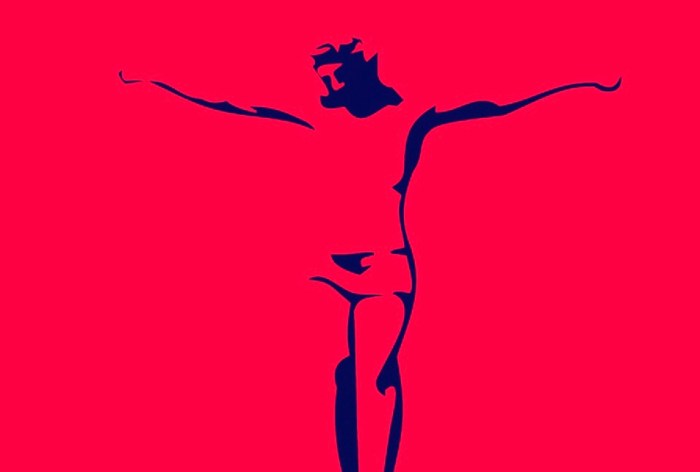
Right now, you admit it, since Jesus could be absolved thanks to you, by a simple keystroke … Imagine … no Christian Religion, no churches, no Inquisition, no religion wars …

Thanks to you, Genghis Khan would not only live to be around 60, but a whopping 75 years, which would have given him the opportunity to occupy all of Europe. No Oktoberfest? Impossible!

Or – not bad either – just now, when with a teeny tiny click you could have first Amerigo Vespucci and then Christopher Columbus each end up as fertilised eggs in miscarriages.

But no, you focus on more recent events.

Ah, the entry of the British into the war in WW1 … you could prevent it …. With the probably certain consequence of a German victory in continental Europe, a quick one against the Russians, with which a Kerensky revolution could hardly have found fertile ground … And without that there would have been no Bolshevik Great October Revolution, no Soviet Union … There would probably have been a gradual democratisation of Europe; National Socialism would never have been able to gain a foothold, which would also have meant that there would have been no Second World War, no GDR, no Cold War … Perhaps no nuclear weapons? Pacifism would have been superfluous… Hell, there would have been no Shoa either, and thus no Israel, no Yom-Ki-Pur.

No, before you get dizzy, focus on more modest events whose impact you can still clearly feel.

Birth of the Greens? You suspect darkly – while Anna-Lena Baerbock’s stammering and Ricarda Lang’s demand for a ban on advertising certain snacks (she herself is obviously rather partial to sugar) flash through your brain – a big mistake, but never mind! You zap on.

A policeman’s truncheon whizzes past Joschka Fischer’s head by a hair’s breadth. You resist the urge to let the bat match him. And on.

Ronald Reagan becomes president … Hm. Assassination. Thanks to your remote control, the ambulance is delayed. Oops. Reagan survives anyway. You pussy! But on with the programme. The Iran-Contra affair is also too amusing …

Kohl becomes chancellor. Brezhnev dies. You don’t care about either. Even the fall of the Wall in 1990. But what doesn’t leave you cold?

Ah. In 1990, the GDR party DA (Demokratischer Aufbruch) joined the West German CDU. With a milk-faced Angela Merkel. Your thumb twitches. You are not a faithless do-gooder, not a Germany-hater, not a reality-denier, you see how Germany, and with it Europe, is changing with Merkel in gloomy lulling, but you would have the choice, could prevent Merkel’s rise. Once again you resist the temptation. More exciting things await. Hard to believe, isn’t it?

Wiesbaden 2007, „Petersburg Dialogue“, 14 October anno Domini, half past twelve at night. Putin wakes up in a cold sweat. He is deeply in love. He has realised: I love Angela Merkel. That very night he sneaks into her hotel. And doesn’t leave her room before the first cockcrow.

Then, in February 2014, a secret meeting in Kiev. While John McCain has been waiting in vain and ignored as if isolated for hours to be able to give the new head of government Yatsenyuk direction, with a few billion dollars in his luggage and geopolitical demands, the latter – thanks to your magic remote control – has just signed a secret agreement with Merkel and Putin. The two coo in love, looking forward to the future three-state alliance. With Germany’s economic and innovative strength, Russia’s mineral resources and Ukraine’s exposed position, a gigantic source of power for the global economy is emerging. Putin is calling off the occupation of Crimea, he has orange roses distributed to people all over Kiev, the Donbas separatists are also being called off, the new three-state alliance is proving to be highly attractive and no Ukrainian wants the EU or NATO any more. The gross domestic product of both countries will quadruple by 2023, that of Germany will double again. There is no war, only a rosy future.

Shock waves are going through the rest of the world. All attempts by the US and the EU, on the other hand, especially the British, to blow up the alliance fail.

George Friedman’s horror scenario, a Russian-German alliance, has come true thanks to your counter-historical remote control.

You’re smiling. Lucky you.“

CARTHAGO; ESSAY AT SUNDAY

Jesus died on the cross; in the past every child knew this, today it is rapidly diminishing depending on where you are. In the Christian world. Is that interesting? Probably not. But what interests me is the cross itself. At some point, it supplemented the – now almost forgotten – simplified sign of the fish as the symbol of Christianity, precisely because Jesus was crucified.  

The cross, a simple emblem, but suitable for the masses. 

But why was Jesus crucified? Couldn’t the beadles of the procurator Pilate have simply beaten the rebel to death? Or beheaded him?

Thinking about this, dear readers, transports one to the Jerusalem of antiquity. Come on, it’s Sunday, eyes closed and through … let’s fly, let’s fly together, it will only take a few minutes.

Imagine the atmosphere, the places, the people. Dirt and dust are there to be seen and tasted, a powerful sun can be felt. Houses of baked tiles, stone and clay roofs alternate, thick-walled walls and staircases of marble and other local stones, paths paved with shells, Roman-style viaducts carrying water, temples towering, such as that of Herod, which Jesus, according to the Gospel, demanded be torn down and then rebuilt in three days. Oxen and donkeys pulling clumsy carts burn themselves into the eye of the beholder. I see Roman soldiers, helmeted, in leather sandals, the significant scar of the helmet belt spur on their chins; the men reek of sweat and sour wine fumes surround them. People dressed in simple linen cloths as coverings are clamouring everywhere. An Aramaic-ancient Greek-Latin babble of voices floating through the air. Evil smells and beguiling floral scents mingle in a sensually disturbing melange. And then I see the lost guy, the unlucky being; he is bound and beaten bloody to the bone. And I see an enraged crowd, it hisses and growls, and it wants the young man dead. But that is not enough for it, not nearly enough. It wants him to suffer; it wants him to die a thousand deaths. Because he has challenged the system. He denounced the system – we would probably say populist today – and demanded humility from the rulers, Herod and his lackeys. They felt threatened. Their very existence. And insulted to boot. That’s probably why Jesus had to die. But maybe he was just a failure, a poor wretch struggling with his fate, who rebelled and simply messed with the wrong people. The „Nawalny analogue“. Also an idealist and naïf; probably often a tragic combination.

But who really knows Jesus‘ fate exactly, since the Gospels were not written by contemporary witnesses, but were written decades later, probably invented.

But I still don’t know why crucifixion of all things was chosen as the way of death? Well, it offered all the unspeakable torments that the Jews wanted for Jesus. A martyrdom lasting days, a cruel death, so that he would know what he was being punished for, and addressed to everyone else: that he would be punished. And again, Nawalny comes to mind.

My gaze wanders from Jerusalem towards the west, towards the Levantine coast; I feel like an eagle and see everything flying by below me from a bird’s eye view. I also travel back in time a good three hundred years. You are still with me? Right? Good …

And suddenly I find myself in Carthage, on the North African Mediterranean coast, near present-day Tunis in Tunisia.

At this time, Carthage is by far the most cosmopolitan city in the world. In addition to the Punians, the Roman name for Carthaginian natives, all kinds of people from all over the world were living there. Phoenicians, Greeks, Nubians, Egyptians, Persians, Libyans, Iberians, Hittites, and of course Sicilians, because Sicily was a Carthaginian province. And most believed in the Carthaginian gods, from Baal, the sun god, to Melkart, the patron saint of shipping; Carthage established a supremacy in the Levant based on its war and merchant fleet.

Especially sacred to the Punic people was „Mother Earth“; they knew that one day they would return to her as soon as each one had crossed the threshold of death. But the thought that even a criminal would be allowed to return to the sacred earth was unbearable to Carthage’s people. They did not want this earth to be desecrated.

And so, for those delinquents who were to be punished particularly severely, they devised a form of death that took place between earth and heaven, namely at a height of a few metres, adapted to the human body structure, on the cross. Nailed there and condemned to die slowly. Thirst, blood stasis, broken bones.

The Romans later simply adopted this method of death, they and many other peoples. For practical reasons. Not for the sake of faith. Bad luck for Jesus. And the starting point for probably the most gigantic advertising icon in history.“

Тоска воина

Сколько дней?
Недель?
Месяцев?
Лет?
Сколько еще жизней?
Как острые камни в трудных странствиях,
в моих ботинках они мучают меня;
а в моем сердце они кажутся горами.
на которые я могу взойти с радостью,
ибо каждая гора, на которую я восхожу оставляет во мне пустоту
и моя любовь к тебе затопляет меня,
так,что она несет меня к тебе, через вершины,
в твои объятия и в твое лоно,
потому что без тебя … я больше не могу быть.

GÖTTERFLUSS

Im Durchwandeln eines spätwinterlichen Märchens, das – gefügt aus schneeigen Hügeln der malerischen Region des Südharzes, gerade noch vor Einsetzen des Erneuerung schaffenden Taus, und den Tagträumen von dir – mich gleichsam süß verschlingt, spüre ich, was Begegnungen zu bedeuten vermögen. 

Deine Blicke kommen aus Augen, tief wie der Grund des Ozeans, Apollons Strahlen in sich tragend; und Poseidon höchstselbst ist das Wasser deiner Tränen. So kommt es, dass, wenn du weinst, Götter fließen.

THE MASK. OR: LOOK BACK.

How it happened; an episode of the turning of the times.

A German City, Winter 2020, 8.39 a.m.

„Only a few days ago, the ash tree outside my bedroom window bore leaves.

True to autumn, its once lush green had given way to a brownish-yellow melange, like the scurvy-infested gums of the necks of the teeth of the unfortunate sailors of yore, but still in picturesque conspicuousness. And unconditional beauty.

Who can escape the earth-coloured sea of autumn unimpressed? Who doesn’t like to wade in the masses of chestnut leaves that have fallen to the ground? Who is not touched by the quiet song of the trees, so bittersweetly lamenting the coming winter?

But today my tree is bare. Stripped bare. Stripped of gold. Stripped of its clothes, dragged into the late-year light.

The crow on one of the branches seems lost. I wonder what’s going on inside it, I knock on the window and scare the clever animal away.

„Mask on!“ roars the colossal woman at me, who confronts my naked face I a storm flood of anger. Her habitus reminds me of that of a certain concentration camp guard from the film “Schindler’s List“ during the violent separation of Jewish children and their mothers.

Since I am standing in front of the bakery, and am about to enter it anyway, I resist the urge to punch her in the face, to at least fill her obviously empty head with a few swells, and instead obey the order of the shotgun woman, a particularly ugly specimen of the plebeian gene pool.

The queue of people behind me twitches. Twenty pairs of eyes of Tuareg intensity scrutinise me. A threatening spirit emanates from this snake.

The beauty of autumn comes to my mind, like the reminiscence of a better world, a bygone world.

How small and pathetic man is in general, I know, and I look forward to a good book, my sons‘ smiles and a better future again.“

A COLUMN WITH AND OVER THE TIME

„A trivial truth, but Time isn’t tangibel; neither can one hold on to it, nor feel it directly in any other way. You can‘t see the time, smell or taste them either. Which is why one can not say that it is beautiful, tall, or unsightly ugly. One is sometimes inclined to doubt their existence.

But … foolishness is as much a part of humanity as is the characteristic of repression.

However, time is a relentless believer, repression is meaningless; Executively, time finds millions of ways to prove itself. Just indirectly. Like an indication. It almost seems like we have a contract with it, the damned time. It gives self, as part of a supply contract, starting with all of our procreation, and it turns away from us, terribly often out of the blue, sometimes only when the flesh falls from our bones.

Time does not pass; it is we, … indeed … we, the people who pass away, wither, die out.

Perhaps the greatest significance at this time is that, as bipolar coexistence on the one hand, it is invisible, imperishable, or unbreakable, and on the other hand, as if it wishes to taunt us or play hide-and-seek, leaving its mark everywhere. And these, oh yes, we are then very well able to see, for example in our faces, wrinkles, tired bones or thickening bellies, to feel, to taste and even to evaluate at our discretion. But with time itself, that’s not possible.

And let’s not be fooled by the supposed „control certainty“ of being able to measure it; every watch is an earthly compromise, as beautiful as it may be sparkling, diamond studded, or sober digitally spitting out the seconds. It does not matter how we divide it, and we believe we can measure it. It deceives us anyway, because we think and feel, it passed. But it is just there, as a living space, as a colossal universal monster, as an eternal moment in which we rise and pass again. Although … it shouldn’t so, if we presume divine justice, Jing and Jang, the „great harmony“. Because a contract contains at least a second page. A contractor just. With duties, but also rights.

The time is so omnipresent, so around of us, as that the consciousness that lives in us and without which we would be just a moving cell pile, be as a tricky parity comes to light.

No life – no time.

With each and every one of us, time also dies. His time. It can only exist if it infests a host, monopolistically with the emergence of life, which recognizes it by its traces and thus colored with everything that human life has to offer. This is the real deal that God has cleverly arranged. He leaves it to us and our time, what we make of our deal, how we colorize, and ultimately feel valued.“

LETTRE AUX FILS

Im Schatten eines Baumes – und wie sollte es anders sein, eines Früchte tragenden Apfelbaumes – sitze ich und … bin. Was die Sonne zersetzt, dörrt, hinwegfegt, entwässert, mit gleißendem Strahlen, bleibt – transzendental – haften, als Reminiszenz und Erkenntnis. In mir.

Was war, geschah.

Was kommen mag, wird vorbei sein, bevor erneut die Zukunft fatalistisch an die Pforten klopft. Doch um euch zu wissen, ihr meine Söhne, ist Glück in Reinkultur. Wie also … wie … könnte ich nicht glücklich sein, trotz des Wissens, dereinst ohne Chance auf Wiederkehr geschehen zu sein?

“aller toten tränen waschen mich, sintfluten branden,
ins gebälk,
es zerbirst;
so viele jener tropfen,
die der himmel barg;
galaxien stürzen,
in mich,
alles anders wird, anders;
nur für eine nacht,
bin ich schwach,
dass kein stolz sich regt,
keine gier mich lenkt,
oder freude meine sinne dünkt,
und liebe mich wanken lässt im lebenssturm; nur schwach ich bin,
für eine frage,
und eine nacht,
so jede antwort glücklich macht.

L’IRONIE DU DÉSIR

da saß er nun 

auf jener bank

deren mattes blau

er erinnert sich genau

gedörrt der sonne kraft

gebleicht der regen nässe

blättrig ihm ins fleische schnitt

doch weh tat‘s nicht

weil blau in seinem geiste wohnt

als der freuden bote

und wider jede not;

auf dieser bank, hui,

die sonne ihm die haare wärmt‘

… und das herz

ganz lang an diesem tag

zu tünchen seinen schmerz

der ihn am leben lässt

ihn in wonnig süße plagt;

so dacht‘ er an die eine

und die andere, oder jene

und was ihm widerfuhr …

war‘s im traume? wahrhaftig gar?

als ahnung nur?

„ich will nicht

keuchte die frau

ihre hände flogen 

auf gierig wanderschaft

„ich darf nicht“

gurrte keusch die nächste

ach so holde

doch bebenden beckens;

„ich kann nicht“

flehte die schöne

schuldgeschwängerten blickes

benäßt des taus in ihrer scham;

so höret doch:

im finstren tal

wo gott zu leiten vermag

des mannes glauben

das weibe sich nicht blicken lässt;

doch wenn das leben farbig schillert

wo gold die flüsse plätschern lässt

und smaragde fallen vom himmel

strahlt eva in ihrer pracht

und des schoßes tor 

ist aufgemacht.

FULMINATION EN JANVIER


Ich schweifte in Gedanken

streifte um den See herum

auf dessen Mitte schwammen Planken

darauf zwei fette Enten

sie sonnten sich ganz stumm;

da wurde es mir, ach, so eng ums Herz

da selbst ein Entlein wohl

dem Glücke zugetan

sich selig wand

wohingegen ich

allein am See

nicht eine erleichternd‘ Träne fand.

*

Nicht die Rüstung ist’s

die ängstigt mich

und nicht der Feind

was immer ihn auch treibt

und nicht erhoben Schwert

überall

und auf blut’gem Schlachtfeld;

doch zu wissen

drei mal kühner hätt‘ ich sein können

im Leben, in der Liebe …

und im Widersprechen

trübt dereinst mein Gewissen.

*

Stetig wie der höhlend Tropfen

unerbittlich das vergänglich Sein

Rhythmen brechen Geist und Knochen

gelebte Träume machen wieder heil;

öffnen sich derweil die Blüten

jene, die die Sonne küsst

eß‘ ich auf das Augenglück

vermag’s zu fliegen und zu sehen

was in mir lebendig ist.

*

Was reitet auf der Zeit

weiß nicht wohin es treibt?

was fängt im Blute an

spürt am Ende Schmerzen dann?

was wird erfüllt durch feurig Liebe

mehr denn Mammon, Neid und Triebe?

Das Leben ist’s du meine Blume

und jeder Blick von dir

das Universum ist.